

Individuals with misophonia commonly experience guilt related to their thoughts, emotions, and behaviors during triggering situations. The intense emotions associated with misophonia—such as anger, disgust, or rage—are ones most people reserve for extreme circumstances or serious interpersonal conflict. However, those with misophonia often experience these reactions toward the people closest to them.
Emotional Reflexes and the Fight-or-Flight Response
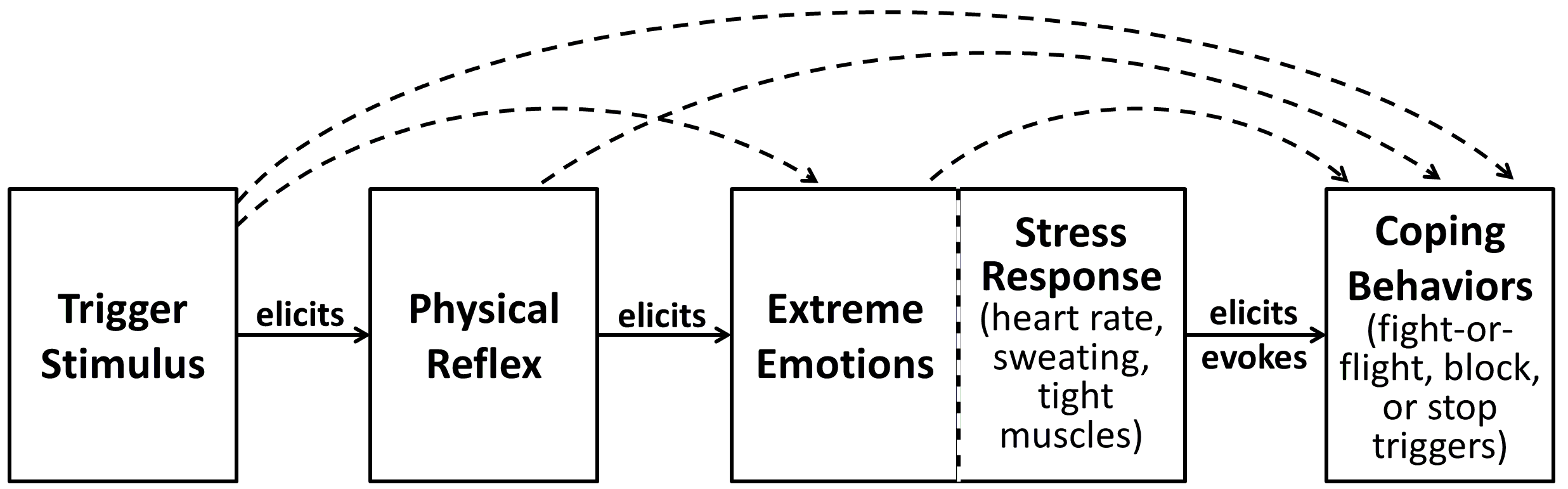
The Misophonia Reflex Model illustrates how a trigger stimulus automatically activates a physical reflex, intense emotional responses, and a physiological stress (fight-or-flight) response, followed by coping behaviors.
When a trigger occurs, the misophonic response activates the nervous system’s fight-or-flight reaction. This response is not consciously chosen. It is an emotional reflex—an automatic, involuntary reaction to a specific sound or movement.
Once this response is engaged, an individual may yell, verbally lash out, or, in some cases, physically react by pushing, poking, or shoving the person associated with the trigger. The intensity of these reactions can feel alarming and deeply distressing, both to the individual with misophonia and to those around them.
Importantly, these reactions do not reflect the individual’s true feelings, intentions, or values. They are driven by the reflexive misophonia response rather than by conscious choice.
Triggers Often Involve Loved Ones
Nearly everyone with misophonia reports experiencing guilt after a trigger episode. Many recognize that their reaction felt out of proportion to the behavior that caused it. For example, children are often triggered by a parent or caregiver. One individual described a stepfather—whom they deeply loved and admired—as their primary trigger person. During car rides, the stepfather’s gum chewing elicited intense misophonia-related emotions, including urges to cause harm. These reactions were completely inconsistent with the child's genuine feelings toward him. Afterward, the individual experienced profound guilt.
Guilt is also common among parents whose child triggers them. A parent’s love for their child conflicts sharply with the rage that may arise in response to an innocuous sound, such as sniffling or chewing. This emotional contradiction often leads to shame and self-blame once the trigger episode has passed.
Misophonia most often develops in response to sounds or movements made by individuals who spend significant time with the affected person, commonly referred to as trigger stimuli. Except in cases involving chronic conflict, abuse, or severe relational distress, misophonia-related emotions are typically directed toward loved ones.
Because these intense emotional reactions are incompatible with the individual’s values and emotional bonds, guilt becomes a recurring and burdensome experience. Guilt commonly arises when behavior conflicts with how a person believes they should feel or act toward someone they care about.
Guilt Versus Responsibility
Guilt is appropriate when a person knowingly and intentionally does something wrong. For example, if a child steals candy from a store, or if someone knowingly keeps extra money they were given in error, guilt reflects a conscious moral choice.
In contrast, individuals with misophonia do not choose the intense emotions that arise when they are triggered. These reactions are not deliberate and do not reflect personal character or values. They are emotional reflexes—automatic responses that occur as a direct result of exposure to a trigger stimulus.
Replacing Guilt With Regret in Misophonia
Because misophonia-related emotional reactions are involuntary, individuals are encouraged to replace guilt with regret. Regret acknowledges that the reaction is unwanted, without assigning blame or moral failure.
Just as a person may regret an unchangeable physical characteristic, it is more accurate—and more compassionate—to view misophonia-related emotions as beyond voluntary control. Self-criticism and guilt do not improve misophonia symptoms. In fact, anything that reduces emotional well-being can intensify the condition.
At this stage of understanding, it is important to recognize that extreme misophonia-related emotions are not chosen and are not a personal failing.
Coping Behaviors Can Be Changed
While the emotional reflex itself is involuntary, individuals with misophonia do have some control over how they respond once triggered. These responses are referred to as coping behaviors.
Aggressive coping behaviors can and should be addressed through intentional management strategies. Although challenging, individuals can improve their coping behaviors by deciding in advance how they want to respond during triggering situations.
One effective approach is reducing exposure to triggers—particularly in environments where escape is limited. As individuals continue learning and practicing misophonia management techniques, they can develop safer, more adaptive responses that support emotional regulation and protect relationships.